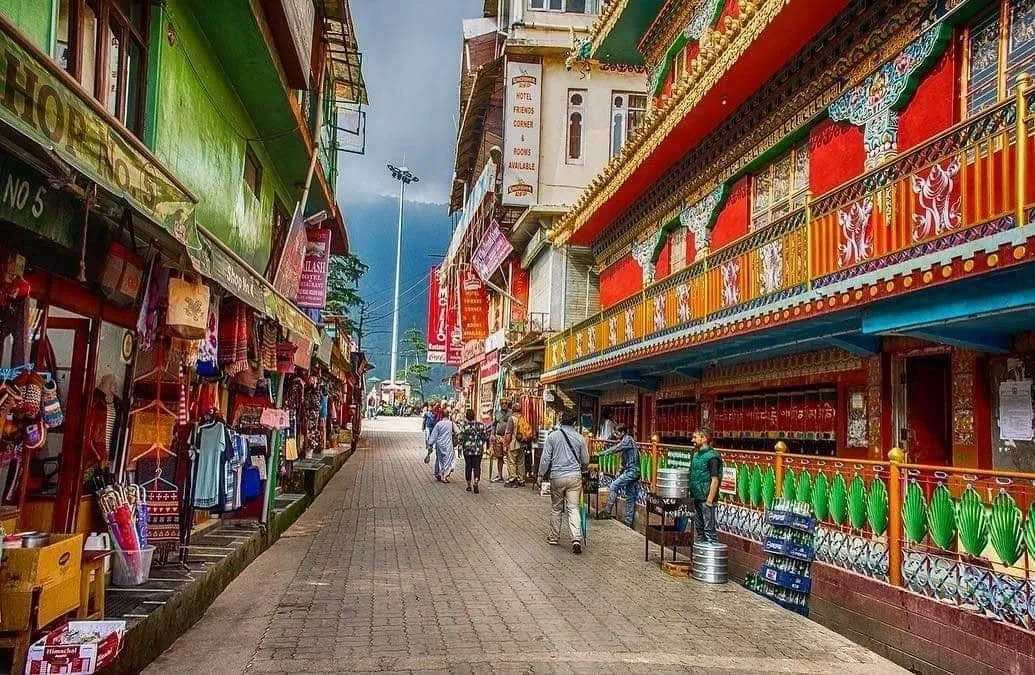
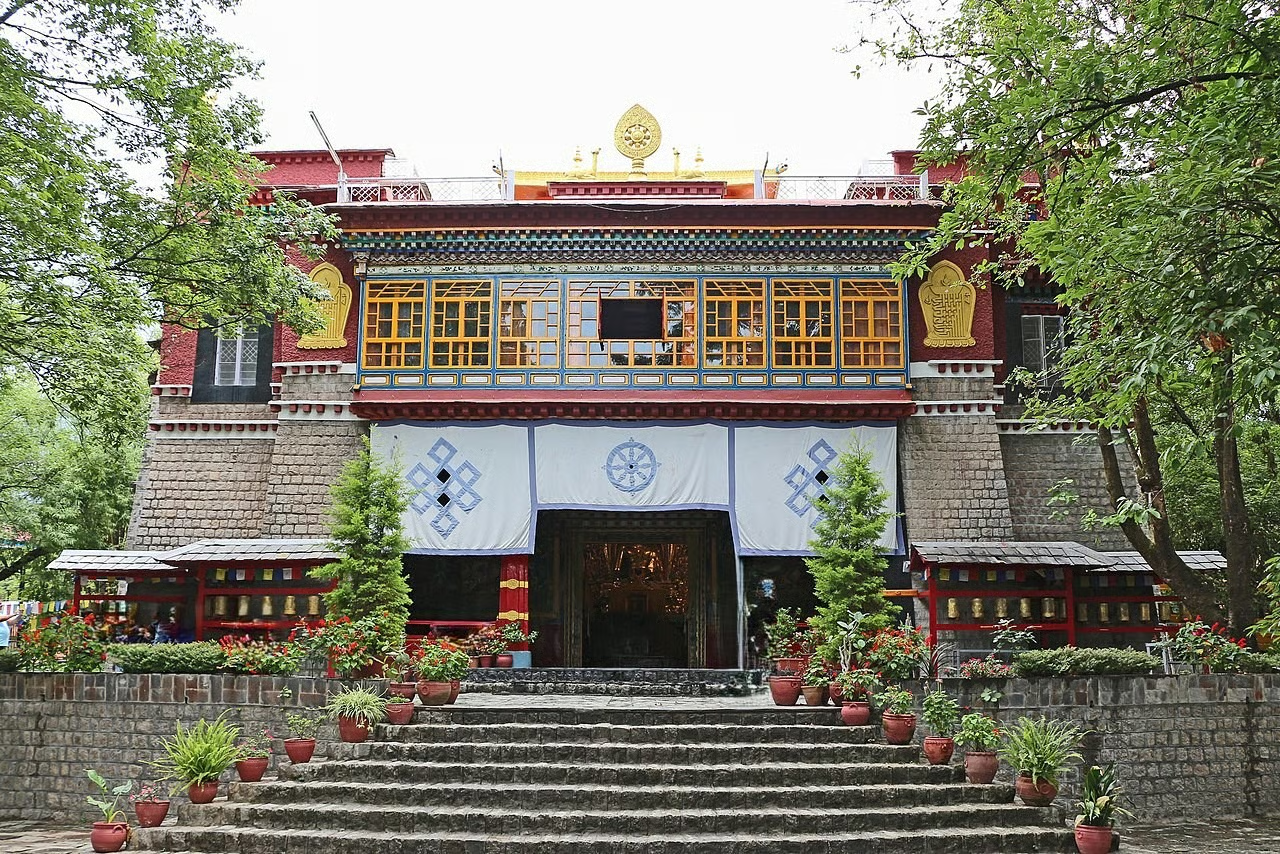
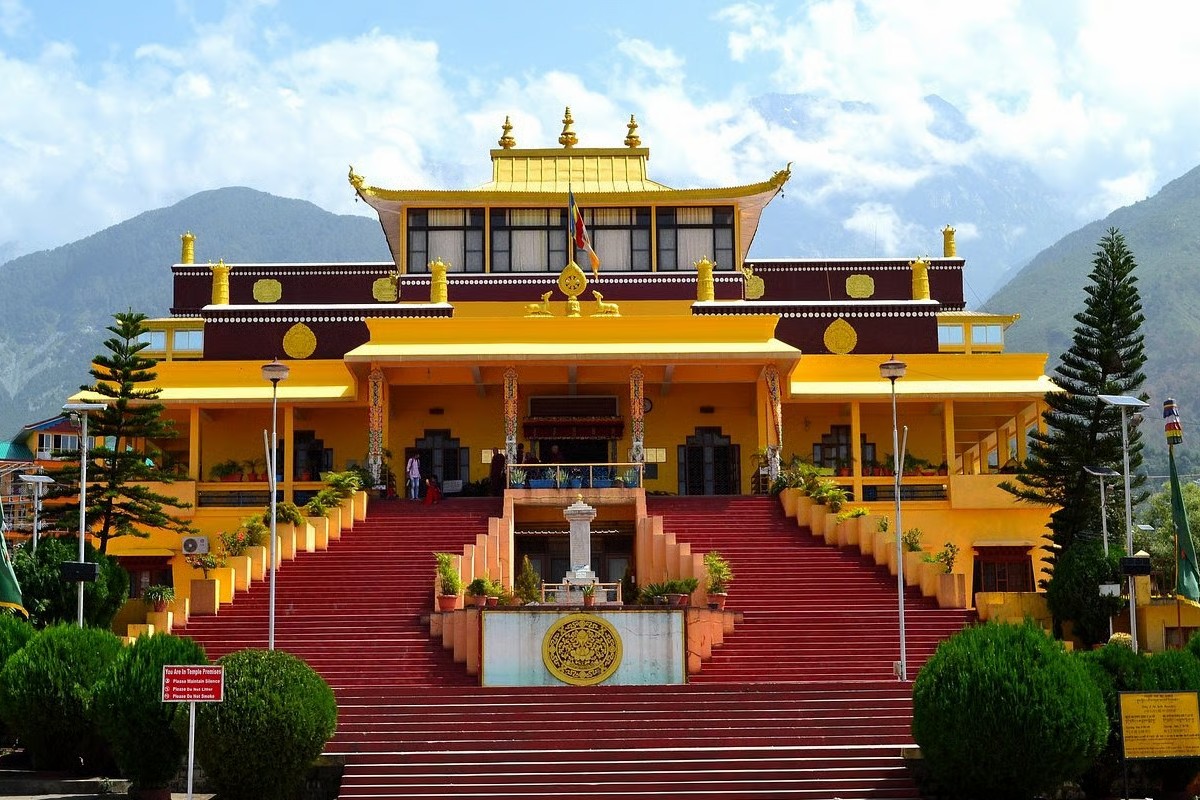
Tucked away in the quiet fields of Sidhbari, the Gyuto Tantric Monastery stands as a striking monument of deep-red architecture against the dramatic backdrop of the Dhauladhar range. Far more than just a picturesque landmark, it is a living citadel of ancient Buddhist mysticism. For travelers looking to venture beyond typical sightseeing, Gyuto offers an authentic window into the rigorous, sacred world of Tibetan Tantric Buddhism, making it a profoundly moving stop on any Dharamshala itinerary.
What is Gyuto? A History of Sacred Traditions
Originally founded in Tibet in 1474 by Jetsun Kunga Dhondup, Gyuto is one of the most revered Tantric colleges of the Gelug school of Tibetan Buddhism. Following the political upheavals of 1959, the monastery was re-established in exile here in Himachal Pradesh to ensure that centuries-old spiritual traditions survived.
Unlike standard monasteries that focus primarily on general Buddhist philosophy, Gyuto specializes in advanced Tantric meditation, complex ritual arts, and esoteric practices. It is a prestigious university of the soul, where young monks undergo decades of rigorous mental training, debate, and discipline to keep a threatened heritage alive.
How to Get There: Your Commute Guide
The Gyuto Monastery is located along the main road in Sidhbari, making it incredibly easy to access from various parts of the district:
By Taxi: A comfortable and direct option. A cab ride from the Dharamshala bus stand takes roughly 15 minutes and costs approximately ₹250–₹300. From McLeod Ganj, it is about an 11-kilometer drive.
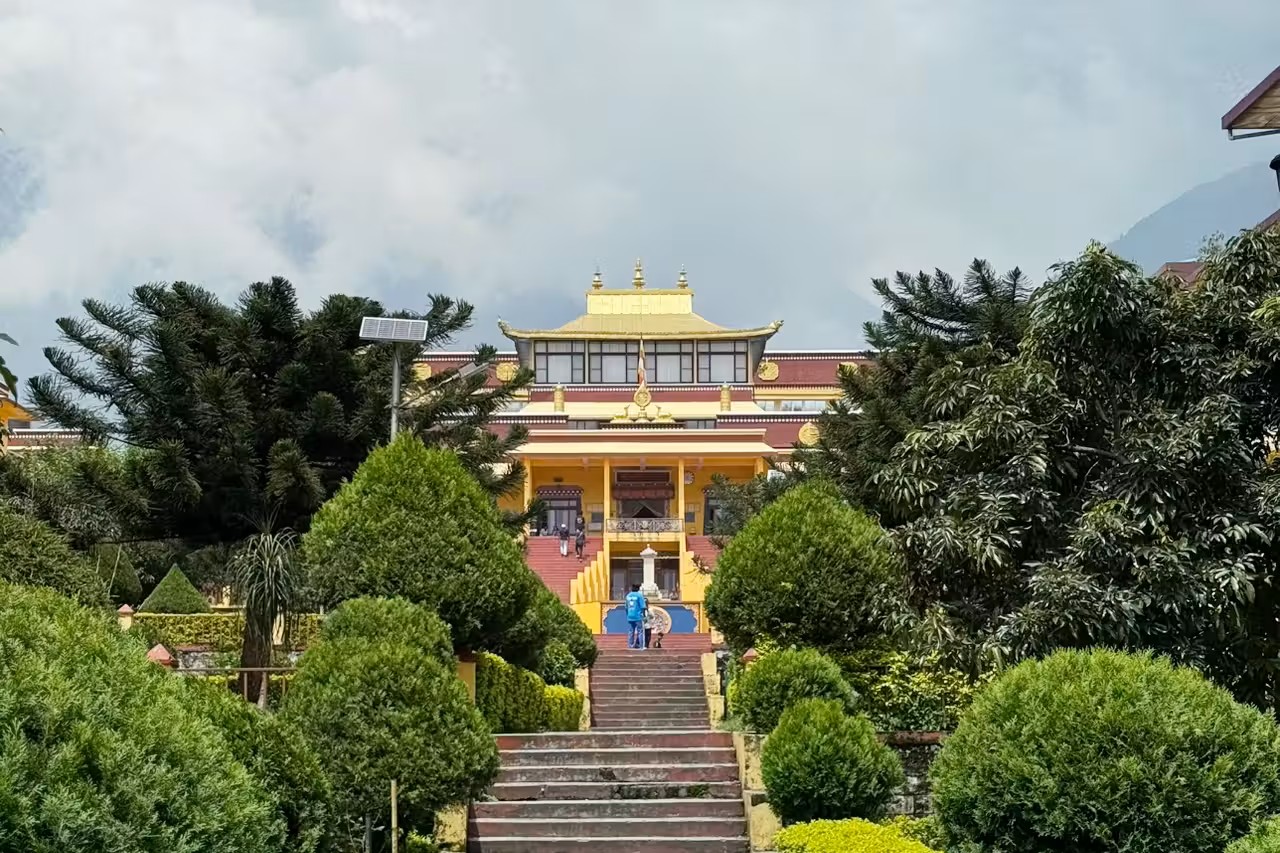
By Bus: Excellent for budget travelers. You can board any local bus from Dharamshala heading towards Yol or Nagrota and ask to be dropped off at the Gyuto Monastery gate. The monastery entrance sits right off the main road, followed by a brief, gentle walk up the driveway.
Plan Your Stay with Us!
Looking for a peaceful retreat? Our modern studio apartments at The Dharamshala Nook are located only 3 km away from Gyuto Monastery, giving you the perfect blend of local tranquility and comfort.
Book Your Cozy RoomWhat to See and Do: A Walkthrough of the Gyuto Experience
As you walk past the main gates, the energetic hum of the market fades away, replaced by the gentle fluttering of prayer flags and the low, resonant vibrations of monastic life.
1. The Grand Tantric Main Hall
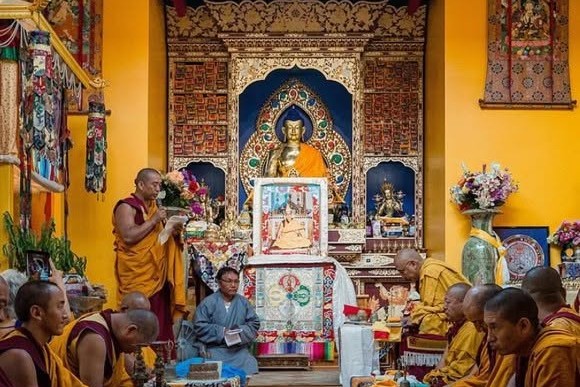
The architectural centerpiece of the complex is the main temple. Step inside (remembering to remove your shoes) to find a cavernous, beautifully lit hall dominated by a massive, gleaming golden statue of the Buddha. The space is lined with low cushions for the monks, while the pillars and high ceilings are draped in vibrant silk thangkas and rich tapestries.
2. The Seat of the Gyalwang Karmapa
Gyuto carries immense contemporary spiritual weight as the temporary residence of His Eminence the 17th Gyalwang Karmapa, the head of the Kagyu lineage. While his quarters are private, knowing that one of Tibetan Buddhism’s highest leaders resides on the grounds adds a palpable layer of reverence to the entire atmosphere.
3. Witnessing the Sacred Ritual Arts
If you time your visit during prayer assemblies, you can sit quietly at the back of the hall and experience:
- Chanting (Chöd): The monks are world-renowned for their unique, deep-voiced chordal chanting, where each monk simultaneously produces multiple tones. The deep bass resonance is a form of acoustic meditation that physically vibrates through the hall.
- Sand Mandalas: Depending on the ritual calendar, you might glimpse monks spending days meticulously laying down millions of grains of colored sand to create flawless, geometric cosmic maps, which are systematically dismantled after the ceremony to symbolize impermanence.
- Ritual Music: The intense cadence of massive Tibetan horns (dungchen), cymbals, and drums accompanying the prayers.
4. The Monastery Visitor Center & Bookshop
Near the entrance, a small visitor center and shop offer an excellent selection of authentic Tibetan incense, meditation bowls, prayer beads (malas), and books on Buddhist philosophy. Purchases here directly help fund the education, food, and healthcare of the resident monks.
5. The Monastic Cafe
End your walk by stopping at the peaceful on-site cafe. It’s a wonderful place to sit among the monks, sip a warm cup of traditional Tibetan butter tea or masala chai, and process the serene energy of the temple grounds.
Essential Visitor Information
| Information Category | Details |
|---|---|
| Entry Fee / Ticket Cost | Free. No admission charge (Donations are welcome to support the community) |
| Opening Hours | 6:30 AM to 7:30 PM (Daily) |
| Best Time to Experience Prayers | Early mornings or late afternoons |
| Guidelines | Dress modestly (knees & shoulders covered). Inside photography is forbidden during prayers. |
A visit to Gyuto Monastery isn't a passive tourist checklist item; it is an invitation to pause, listen to the heavy resonance of ancient chants, and witness a community completely dedicated to the preservation of inner peace.